Exploring Plymouth Sound From Land With Children
Choose a shore-based family outing around Plymouth Sound, with viewpoints on the Hoe, at Mount Batten and across at Mount Edgcumbe.
Published
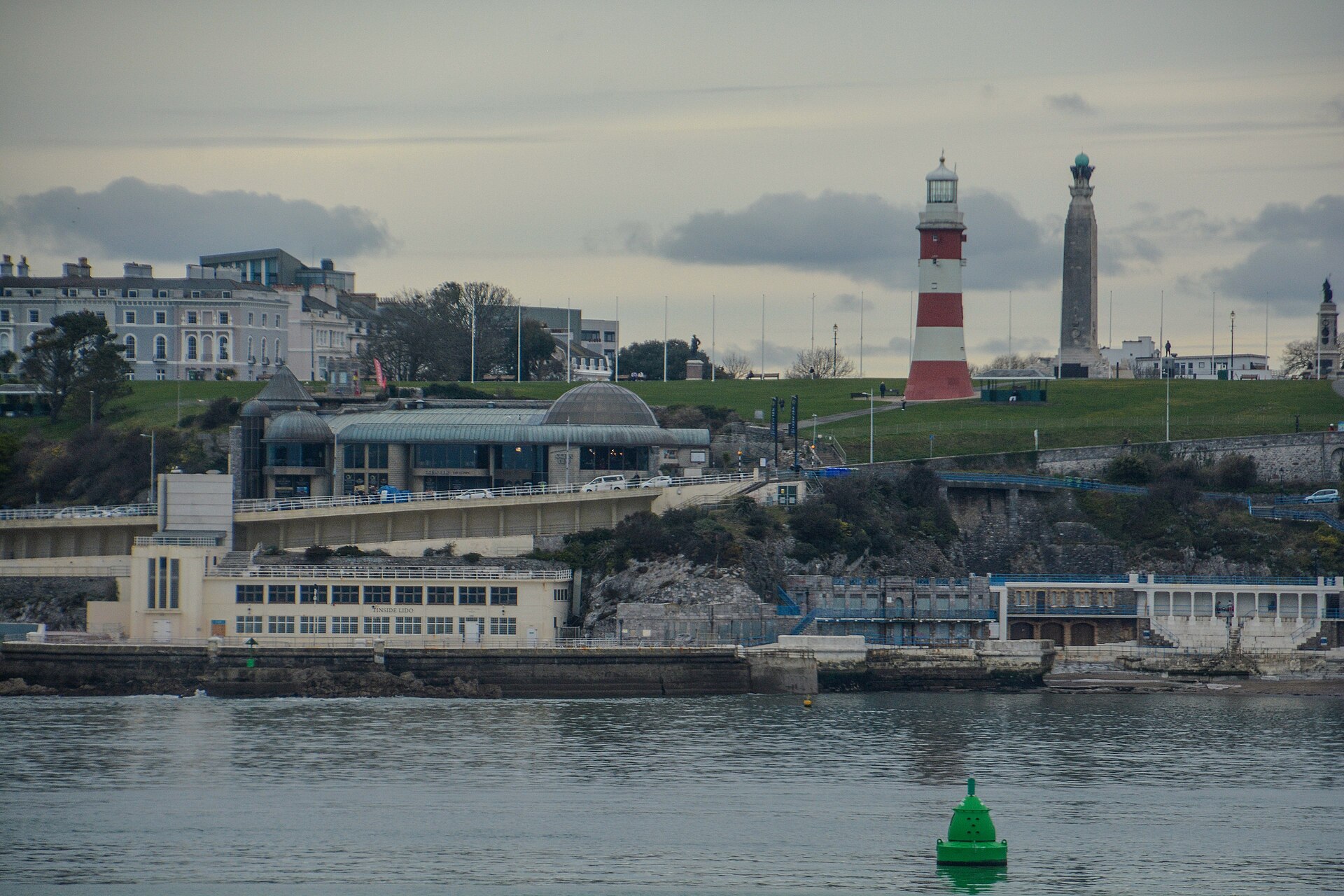

You can explore Plymouth Sound with children while keeping the outing entirely on land. Plymouth Hoe offers views from high ground, Mount Batten gives a different shoreward perspective, and Mount Edgcumbe combines country park walking with views across the water. The Plymouth Sound National Marine Park’s viewpoint guide provides the starting points. Choose somewhere that suits the walk you want, then give the children something specific to look for.[2]
Plymouth Hoe: A View and a Lighthouse
For a first outing, we’d choose Plymouth Hoe. The Marine Park describes pathways along the Hoe and panoramic views from its high ground. That gives the visit a straightforward focus: walk with the Sound beside you, pause to look across it, and let the view set the pace.[2]
Smeaton’s Tower, the lighthouse on the Hoe, supplies a heritage stopping point. You can make the building part of a looking-and-drawing activity without organising the outing around a climb inside. Ask children to sketch its outline, then discuss why a lighthouse would need to be visible from the water. Keep questions exploratory rather than turning the walk into a test.[2]
The Hoe also makes a useful reference point for another day. At Jennycliff, children can look back towards it and compare the waterfront from the opposite direction.[2]
Mount Batten: Look Back Towards Plymouth
Mount Batten offers a view towards Plymouth’s waterfront, with Mount Batten Pier identified in the Marine Park’s viewpoint guide. The destination directory lists Mount Batten at Plymouth PL9 9SJ. Use that location when planning the journey, keeping it distinct from Mount Edgcumbe at Cremyll.[1][2]
Give children a simple drawing challenge: divide a page between the water and the waterfront, then add the shapes they can distinguish. Older children could compare their drawing with a view from the Hoe on a separate visit. There’s no need to identify every building for the change of perspective to become interesting.[2]
Jennycliff: Pick Out Places Across the Sound
Jennycliff is the strongest choice here for a named-landmark spotting activity. The Marine Park identifies views towards Plymouth Hoe, the east Cornwall villages of Kingsand and Cawsand, Fort Picklecombe and Mount Edgcumbe Country Park.[2]
Before setting out, mark those places on a map together. At the viewpoint, let children try matching the map to the view, starting with the Hoe if they already know it. A fort, villages and a country park give you different kinds of places to discuss. Leave any uncertain identification as a question to check later.[2]
Devil’s Point: Islands and Passing Vessels
At Devil’s Point, the Marine Park highlights views of Plymouth Sound, Mount Edgcumbe and Drake’s Island. This is a useful alternative if your children are more interested in islands and ships than in drawing buildings.[2]
The guide also identifies Devil’s Point as a place to see naval vessels travelling to and from Devonport Dockyard. Treat a sighting as a possible extra. There’s no guarantee a vessel will pass during your visit, so give the outing another purpose, such as locating Drake’s Island and finding Mount Edgcumbe across the water.[2]
Mount Edgcumbe: Make the Hill Part of the Choice
Mount Edgcumbe has a different setting: a country park with views over the Sound. The Marine Park’s directory gives its address as Cremyll, Torpoint, PL10 1HZ. Plan it as its own destination rather than adding it casually to a walk around Plymouth’s waterfront.[1][2]
For a land-based visit, the viewpoint guide describes heading uphill to see the sea from above. That uphill element belongs in your decision before setting off with children. If the purpose is simply to spend time looking across the Sound, choose the stopping point around the walking your family wants to do. Save a second viewpoint for another outing and bring the drawings back for comparison.[2]
Sources and checks
These sources were used for this article. Availability, prices and service details can change after the stated check date.
- Places to go - Plymouth Sound National Marine Park
Checked 20 October 2026.
The directory lists Mount Edgcumbe at Cremyll, Torpoint, PL10 1HZ. The directory lists Mount Batten at Plymouth PL9 9SJ. Mount Batten and Mount Edgcumbe are separately listed destinations.
- Insider's Guide... The best views of Plymouth Sound - Plymouth Sound National Marine Park
Checked 20 October 2026.
Plymouth Hoe has pathways and panoramic views of Plymouth Sound from high ground. Smeaton’s Tower is a lighthouse on Plymouth Hoe. Mount Batten Pier offers a perspective towards Plymouth’s waterfront. Jennycliff has views towards Plymouth Hoe, Kingsand, Cawsand, Fort Picklecombe and Mount Edgcumbe Country Park. Kingsand and Cawsand are villages in east Cornwall. Devil’s Point has views of Plymouth Sound, Mount Edgcumbe and Drake’s Island. The guide identifies Devil’s Point as a place to see naval vessels entering and leaving Devonport Dockyard. Mount Edgcumbe is a country park where heading uphill provides views over the Sound.